Humans and Agents: the new team

What if your next teammate wasn’t human, but still attended meetings, executed tasks, and improved over time? That scenario is quickly becoming reality. Agents are moving beyond simple automation into roles that require coordination, decision-making, and execution. As they integrate into everyday workflows, they are not only changing how work gets done, but they are also redefining what it means to be part of a team.
A new way to build
Ask most enterprise teams where projects stall, and the answer is the same: translating messy, evolving business processes into systems. Traditional development forces teams to over-specify workflows upfront, even though those workflows rarely stay stable. Agents offer a way out of that trap. Rather than locking processes into code, enterprises can define goals and guardrails, allowing agents to adapt execution as conditions change. The result is not just faster delivery, but systems that remain aligned with the business long after they go live.
This shift matters: most traditional AI efforts have struggled to deliver impact. Some studies suggest that as many as 95% of enterprise AI pilots fail to generate measurable business outcomes, often due to poor integration into real workflows.
Custom-built agentic core systems aim to close that gap not by adding more intelligence in isolation, but by embedding agentic workflows directly into execution.
The emergence of a collaborative workforce
As the way we build changes, so does the workforce itself. It is no longer purely human. It is a blended system of humans and agents, working together.
This is not a distant vision. According to Capgemini, nearly 6 in 10 organizations expect AI to act as an active team member or even supervise other AI within the next year (Source: Capgemini). Looking slightly further ahead, organizations expect agents to become embedded within human-supervised teams as standard practice. While some studies project Human-Agent collaboration to grow by over 300% in the next two years.
This shift is redefining roles, not eliminating them. AI agents must be seen “not as tools, but as part of the team”.
What makes this model powerful is using complementary strengths. Humans bring judgment, creativity, and the ability to navigate ambiguity. Agents bring speed, scale, and the ability to act across systems continuously. They can execute tasks, analyze information, and increasingly, take real-world actions, from updating systems to triggering downstream processes.
That shift from insight to action is what turns agents into true collaborators.
Towards core systems of action
Nowhere is this transformation more visible than in core enterprise systems.
Core systems like ERP, WMS, and TMShave historically functioned as systems of record, repositories of information and trackers of activity. Over time, they evolved into systems of engagement.
Now they can become something else entirely: autonomous systems of action.
In customer operations, engagement is no longer a series of manual steps, but a continuous flow of agent-driven interactions that adapt in real time. In supply chains, disruptions are not simply reported; they are responded to instantly, with agents rerouting and recalibrating operations.
Systems are no longer passive. They are active participants. They don’t just support work. They do work.
Rethinking how we work
As systems become active, organizations must rethink how work itself is structured.
Work is no longer best understood as a sequence of predefined tasks. Instead, it is defined by outcomes, with humans and agents dynamically determining how those outcomes are achieved. Ownership becomes fluid, replaced by orchestration across people and agents.
At the same time, enterprise systems become “living entities”. They evolve through interaction, feedback, and real-time execution rather than remaining fixed after go-live and deployment.
This shift, however, introduces new challenges, especially around trust.
Despite growing adoption, trust in fully autonomous agents remains limited. In fact, research shows trust levels dropping significantly, with only a minority of organizations comfortable relying on agents without human oversight.
And the human impact is real. 61% of organizations report rising employee anxiety about AI agents, even as adoption accelerates. (Source: Capgemini)
The transition to a collaborative workforce is as much about organizational design as it is about technology.
The role of AI-led platforms
Enabling this shift requires more than incremental tooling. It requires a new kind of development platform.
Platforms that provide the foundation for designing, deploying, and governing intelligent core systems where humans and agents collaborate. They allow organizations to define intent rather than just logic, coordinate multiple agents to build core systems, and integrate agents deeply with these core enterprise systems.
Organizations that embrace this model are not just improving efficiency; they are changing the way they work. They adapt in real time because agents can respond dynamically to changing conditions.
The competitive implications are significant. AI agents are expected to play an increasingly central role in value creation, with some predicting they will drive the majority of enterprise AI impact in the coming years.
The New Way to Build
The next wave of enterprise development isn’t about faster code. It’s about a fundamentally different way of building, where human intent drives every decision, teams and AI work as one, and core systems are built to evolve.
The future is released soon, and it looks like this:
- Human intent at the center. Not just faster execution, but genuine creative insight driving application generation, with business and IT aligned around what they’re building and why.
- Truly human-AI collaborative. Bigger development teams, human and AI teammates alike, working together in a single, governed flow.
- Enterprise and future-ready. Intelligent core systems that stay open, adaptable, and governed, instead of solidifying into new legacy.
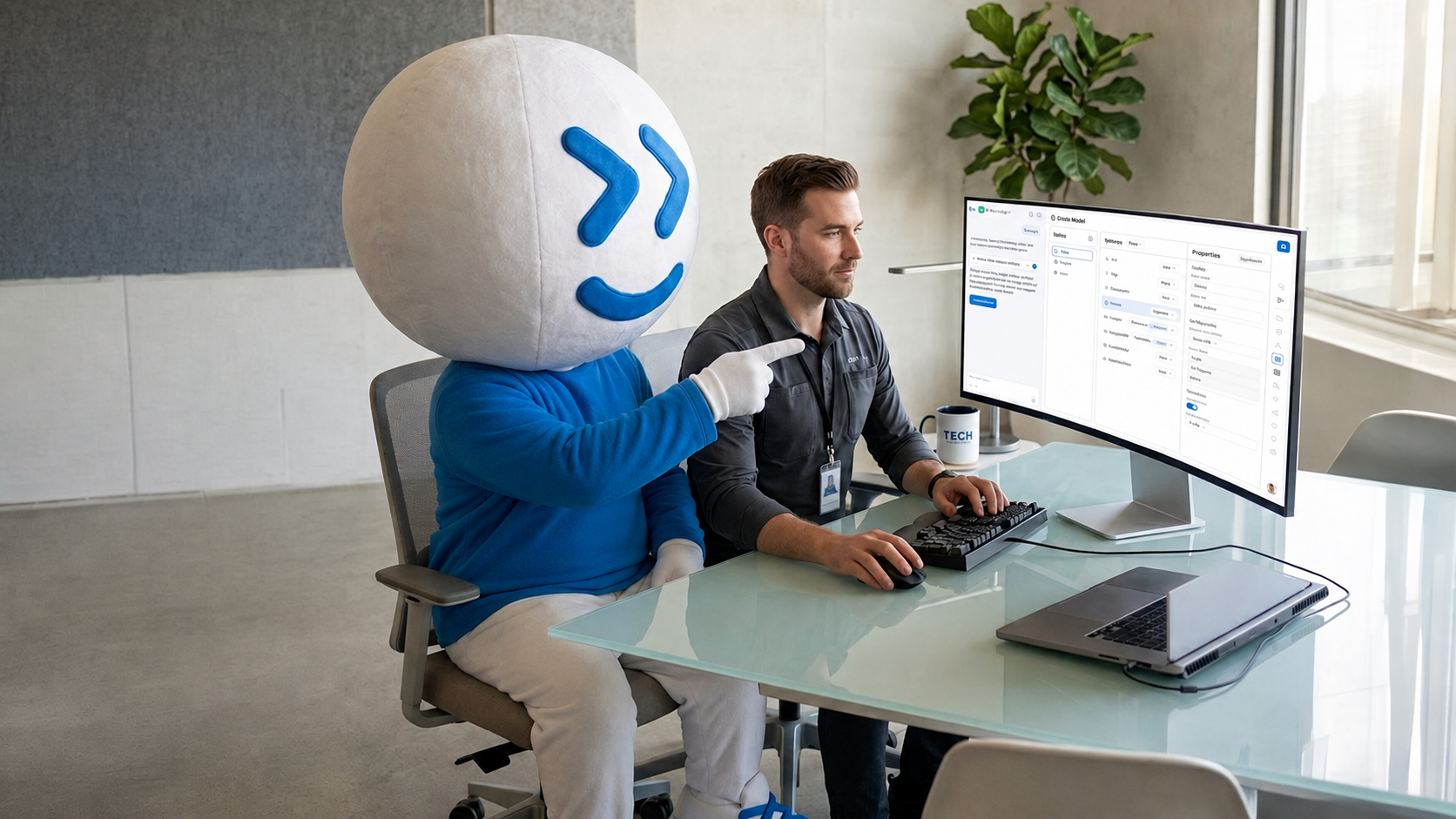
At the heart of that future sits Rai, Rappit’s AI companion, built for enterprise software teams who refuse to choose between speed and control.
Rai brings the power of an entire software development team to your fingertips, guided by human intent and built to scale and evolve with your business, without creating tomorrow’s legacy. Nothing like this exists yet!