Watch how to modernize applications within minutes instead of months
Try the blueprint with your docs
You’ve seen how it works. The next step is seeing it on your own system.
If you would like to bring your own docs, we’ll arrange an NDA.
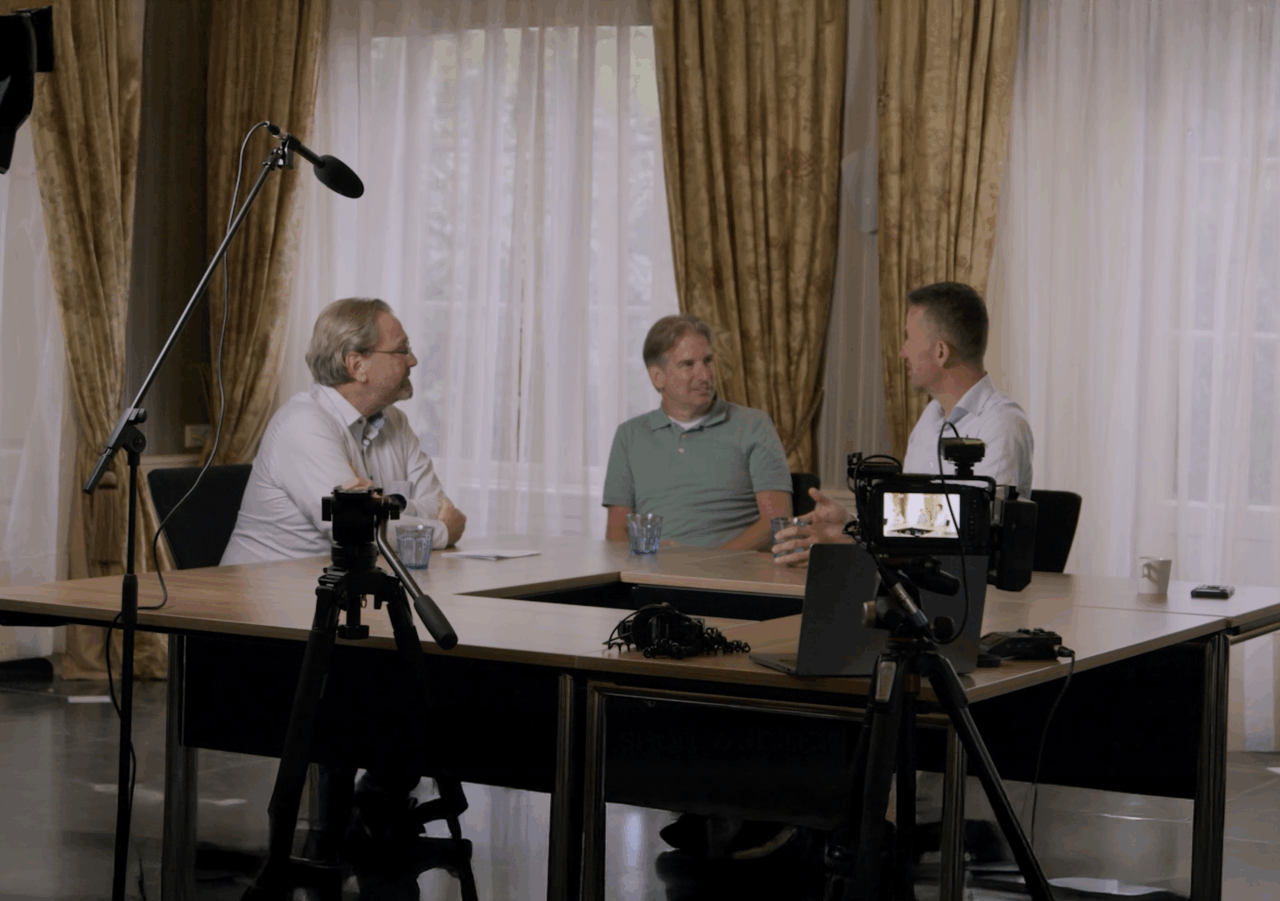
Hunkemöller video
Rappit’s smart legacy modernization capabilities enabled us to re-imagine and rebuild a custom enterprise application in months. This delivered business continuity for over 750 stores
Jan-Willem van Setten – Enterprise Architect at Hunkemöller
Today’s legacy enterprise system reality and the costs
Legacy systems are draining resources, block innovation and drive talent away.
- +50% of enterprises say legacy IT slows down AI efforts
- 70% of Fortune 500 software is 20+ years old
- 6-12 months is required to understand legacy systems manually
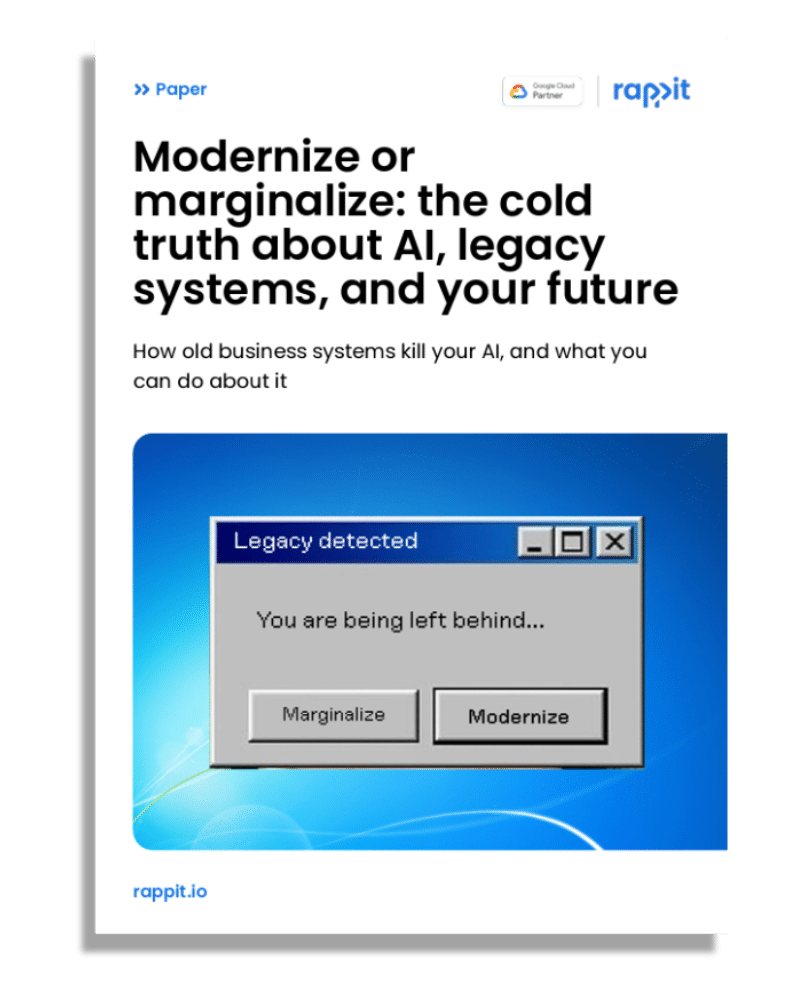
Read more about this in Modernize or Marginalize: The cold truth about AI, legacy system and your future.
Q&A
Does it still make sense to use Rappit if my needs are very standard and SaaS solutions are available?
Even for standard needs, a custom solution might provide additional benefits, as it can more economical compared to the implementation fees and (end-user based) subscription cost of a standard SaaS solution (consider total TCO over lifetime). And, you have full ownership of your solution (no lock-in compared to the standard SaaS solution)
what if i want add a functionality, fix a bug, change a screen, do i need to re-generate the entire app again? And how long does it take?
This depends if you are changing fundamental elements like the data model or a small element like the formatting of a field. The latter will be faster, but in any case, this will be done within a matter of minutes.
How much time does it take to obtain a first deployable version of the app?
Once the cloud infrastructure is set up, a first version can be available in under half an hour.
Does the use of AI result in cheaper modernization? How does this compare to alternatives?
Yes, if you consider the “Total Cost of Ownership”, like time spend by e.g. the customer team on requirements gathering. Compare this to traditional, or AI-assisted high-coding
When there is no requirement document, can you also start with a code base, application screenshots and report/output of the application ?
Application screenshots and datamodels (SQL format) can also be processed. Source code processing is an additional offering, supported by the Rappit professional services team
Who would you consider to be your top competitors? Would ServiceNow be one in your opinion?
Rappit’s key competing alternatives are AI-assisted coding tools and agentic platforms. Not so much ServiceNow, which is focussed on workflows, not on building and evolving custom core systems.
Does your solution only come with the cooperation of Google cloud services?
We are Google Cloud-native
Can you create microservices on on premise ERPs, such as Baan or Infor LN, and port them easily when the ERP is moved to the cloud (say AWS)?
With Rappit you can build micro-services based solutions “on top” of on-premise ERP systems. We currently don’t support on-premise or AWS deployment
What makes the blueprint "Agentic"?
It’s agentic under the hood and makes used of Google Cloud’s AI technology (like Vertex AI).
Does the use of AI result in cheaper modernization? How does this compare to alternatives?
Yes, if you consider the “Total Cost of Ownership”, like time spend by e.g. the customer team on requirements gathering. Compare this to traditional, or AI-assisted high-coding
How much control do we have?
Complete. Your team validates and refines every model before generation. All changes are aligned with governance standards.
How is this different from code migration?
We extract intent, with precision, and rebuild on cloud-native architecture. True modernization, not code conversion.
Can we modernize multiple systems?
Yes. Generate blueprints in parallel.
See a legacy system rebuilt in minutes
Schedule a quick chat so we can see how the agentic modernization blueprint works on your functional docs.
Of course we can also use our own functional documents during this call. But if you do would like to bring you own docs, we can arrange an NDA first.
From legacy to live in 4 steps
A transparent, precision-driven process that keeps you in control.
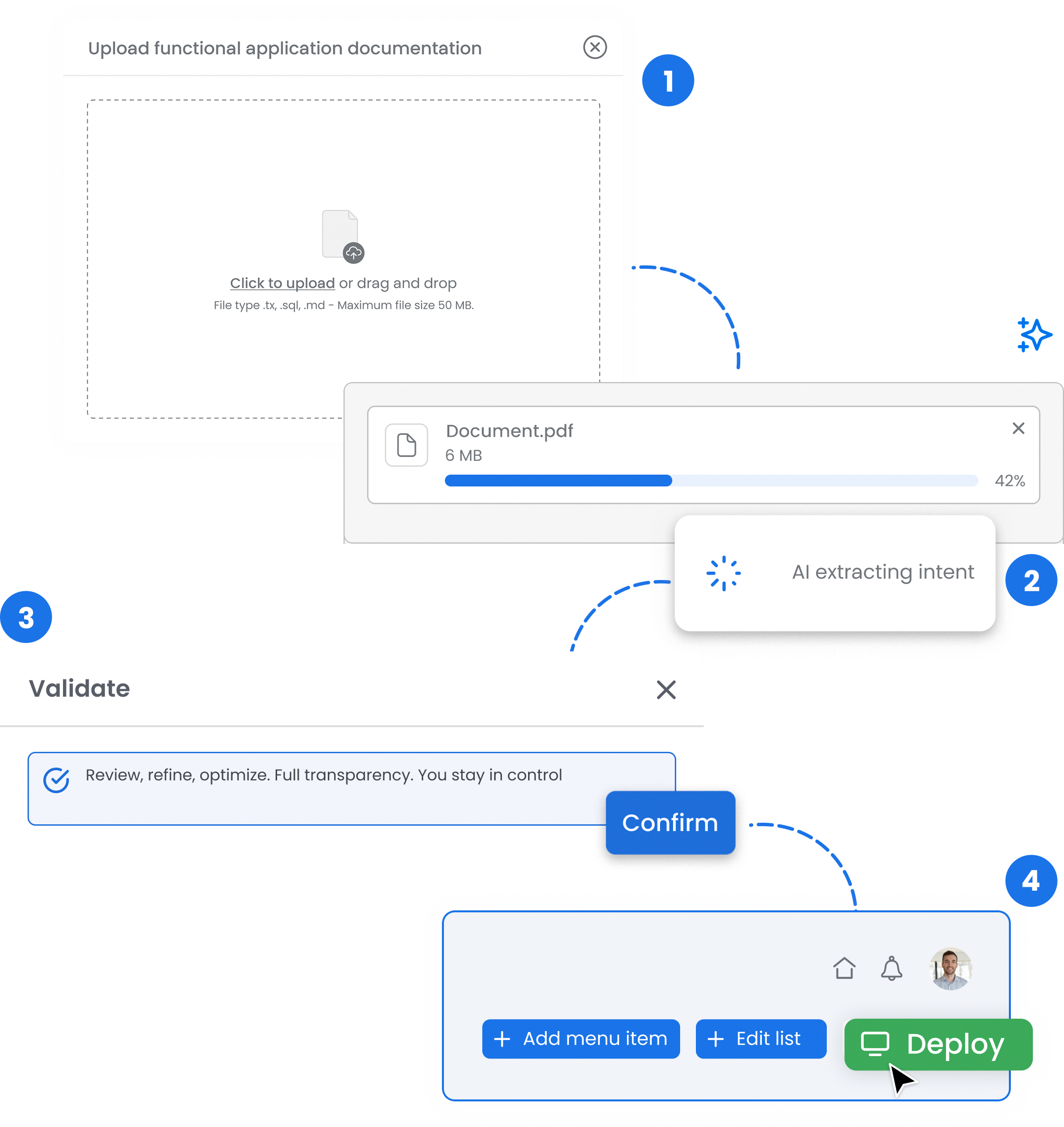
Step 1: Upload assets
Securely upload functional documentation in PDF format, other project related documents in PDF, and application screenshots.
Step 2: AI extracts intent
AI Agents extract the intent of requirements with precision. It generates modules, processes, data model tables, roles, and user stories. Automatically creates the visual pages.
Step 3: You validate
Validate at each step. Generate, ideate, and validate. Review and optimize every suggestion. Full transparency.
Step 4: Deploy application
Production-ready components generated. Get a fully functioning enterprise core in minutes.
App generation capability
A unified engine to prompt, document, and deploy.
Generate, ideate, & validate
A continuous loop of creation and refinement.
- Start with a prompt or upload a functional PDF document.
- Iterate on AI-powered suggestions instantly.
- Full control over the creative process.
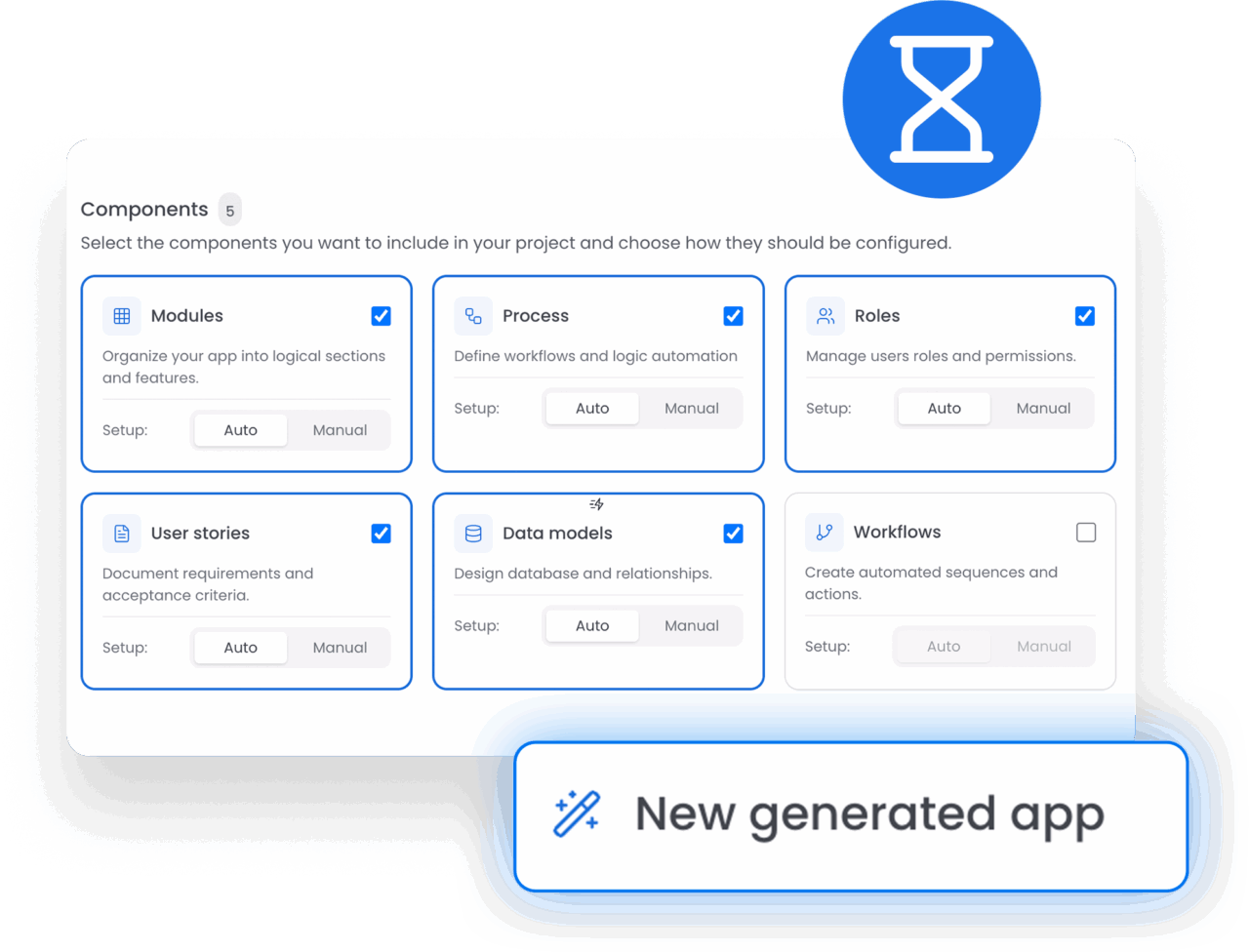
Application blueprint in minutes
Speed without sacrificing structure.
- Automatic updates to visual elements.
- Rapid prototyping to production code.
- Skip months of manual iteration and get an enterprise application blueprint in minutes.
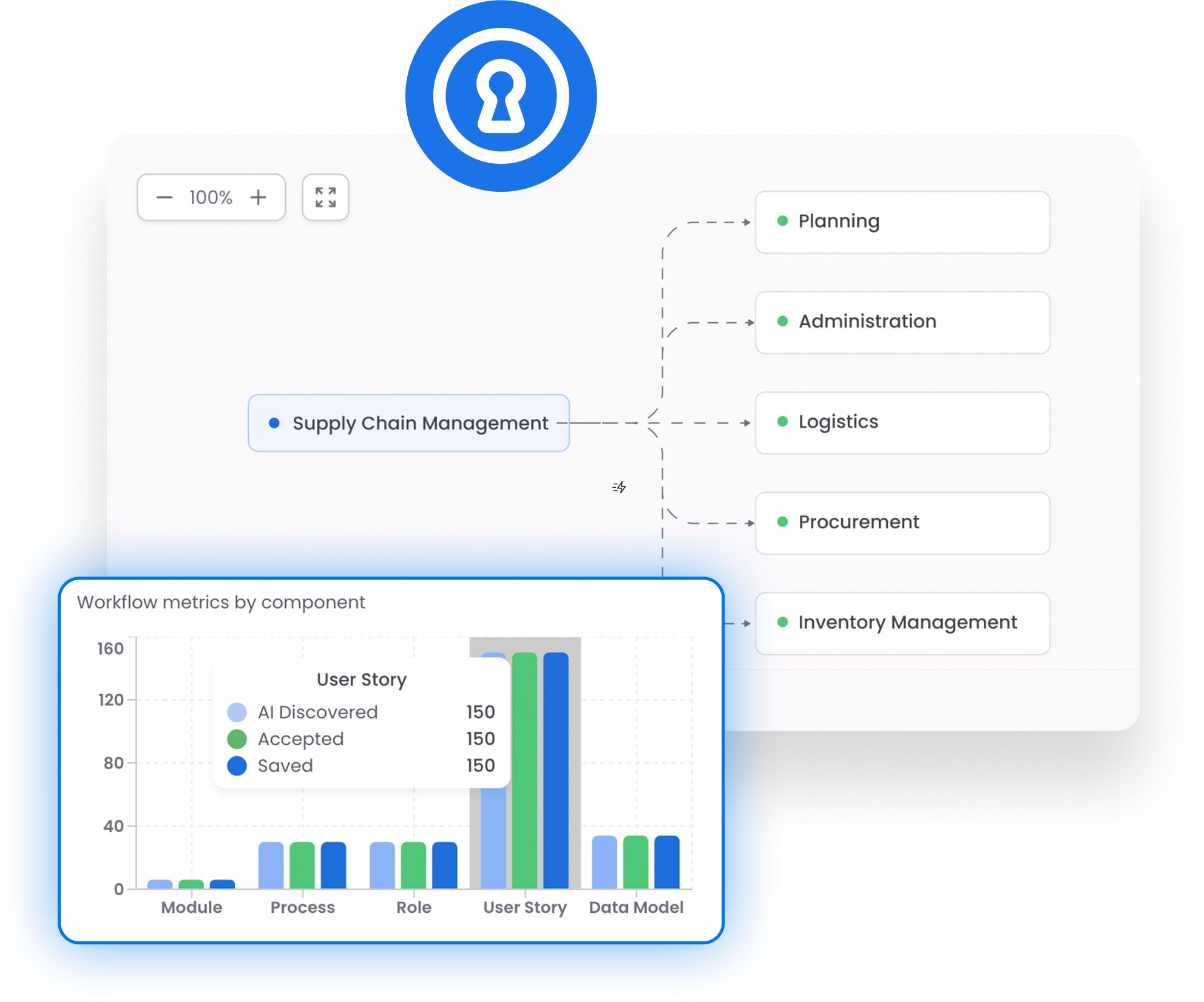
Trusted secure code
Enterprise-grade security is built in by default.
- All changes are aligned with governance standards.
- No vendor lock-in. You own the code.
- Deploy to your own secure cloud environment.
Accelerate your roadmap
Automating discovery frees developers to innovate. Get a modern, cloud-native foundation on day one.
70% faster development
50-70% reduction in foundation development time.
More than 80% approval rate
Most AI outputs need minor or no edits.
15 days for full discovery
Setup for complex systems (100+ entities) that traditionally took months.
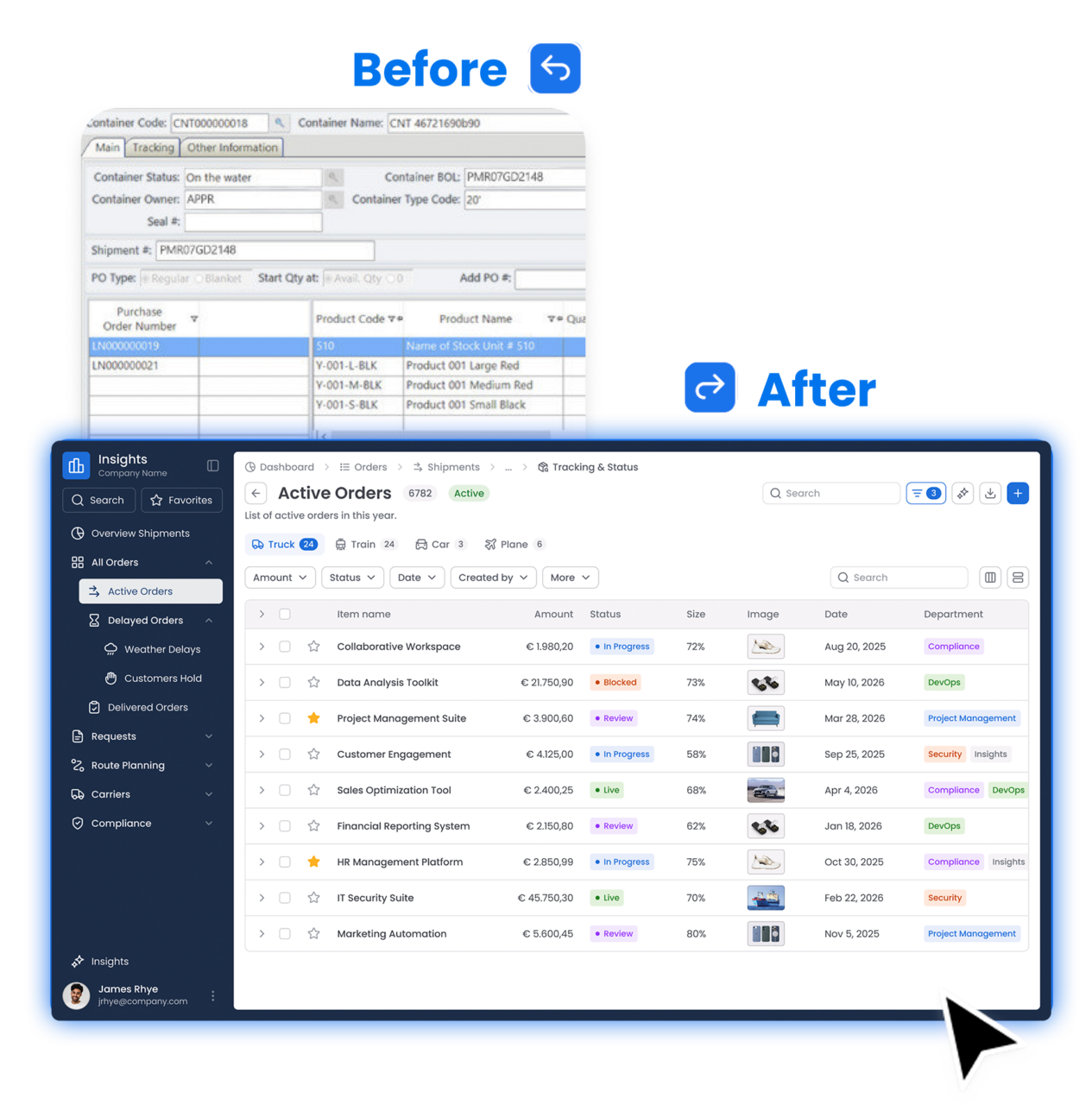
Reimagine, don’t replicate
Agentic Modernization Blueprint extracts what your legacy system actually does (the data, roles, and user flows) so your team can decide what to keep, what to optimize, and what to reimagine.
Rebuild on modern, cloud-native, AI-ready architecture without carrying forward decades of technical baggage.
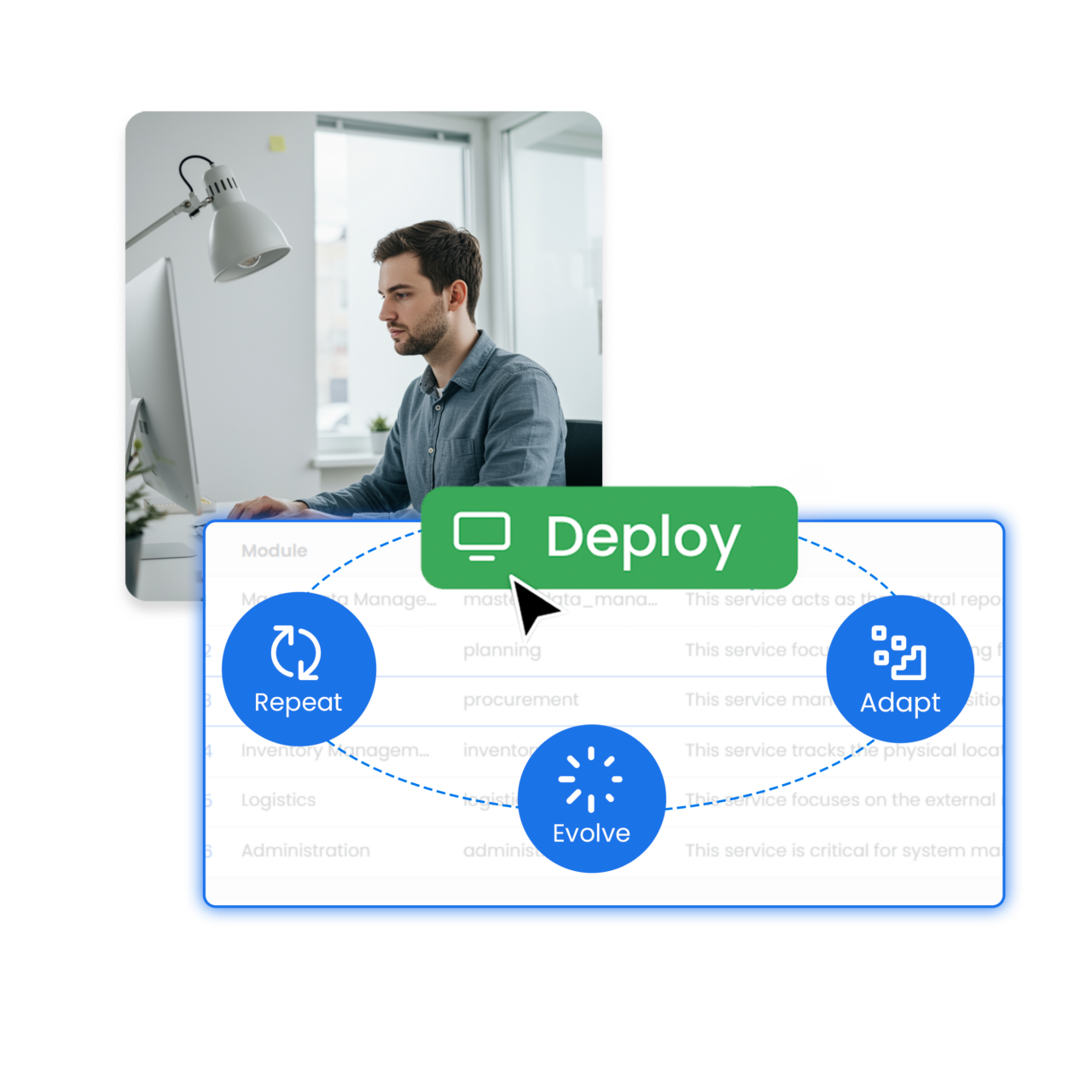
Forever young
Your modernized applications are built for continuous evolution. Adapt to business changes in minutes. No more multi-year cycles or tech debt accumulation. Legacy modernization is the start of continuous innovation.
How the blueprint works
Powered by Google Cloud
Leverages RAG using Vertex AI and Gemini models. Deploy to your own GCP environment. No vendor lock-in. Vector indexing for incremental AI suggestions.

Partner with solution development experts to modernize your legacy system
Beyond a platform. We are your strategic partner in building a competitive advantage. Our proven approach to (re)build customer enterprise systems is build on three pillars
Deep domain expertise
We know what works because we’ve done it before. We specialize in modernizing mission-critical legacy systems for industry leaders.
AI-led platform
Our proven battle-tested development platform helps you turn innovative ideas into operational reality, embedding best practices from the start.
Collaborative delivery
Replace aging software without downtime. We integrate seamlessly with your teams to co-build custom solutions that keep your business running while you modernize.