Rappit Spring Release: Enterprise‑grade backbone for scalable, AI‑powered applications

Rappit’s Spring release hardens its enterprise‑grade platform foundation, so teams can evolve applications and layer on AI experiences with less risk. It combines three advances: an even stronger platform for continuous change, extended Agentic modernization blueprint capabilities, and adaptable AI agents that integrate into your core enterprise systems for fast decision support and boosted digital revenue.
Cutting-edge Spring Boot backend and flexible DTOs for scalable enterprise applications
Rappit now generates applications on an upgraded Spring Boot backend designed for long‑term evolution with a dedicated DTO layer, JPA repositories, stronger transaction handling, the outbox pattern for cross‑store consistency, and support for virtual threads.
Following Rappit’s “forever young” principle, customer applications move to newer Spring and library versions simply by regenerating, gaining performance and security improvements, with less technical debt. Core applications can scale as data, traffic, and integrations grow, while staying easier to debug and maintain.
Application developers get these advanced backend patterns through configuration rather than boilerplate code, boosting productivity and reducing cognitive load.
DTOs can now be easily created for specific use cases, so teams define lighter, purpose‑built data views and APIs that slim payloads and tighten access without changing backend code. Architects get precise control over performance and data exposure, whether they are optimizing internal screens, external APIs, or both.
- Business value: A more resilient core that can support new initiatives, channels, and products without constant rework.
- IT value: A scalable, maintainable codebase aligned with industry standards, with fine‑grained control over data, performance, and security.
Parallel development at scale with Git-style branching, merging, and tagging
Rappit Developer now brings Git‑style branching, merging, and tagging into the platform, so large teams working on core systems can make parallel changes safely. Product squads spin up branches for features and hotfixes, then use a guided merge wizard to review differences and control what reaches the main branch.
Tags capture immutable snapshots of the application, giving teams reliable release points and instant rollbacks when a deployment causes issues in production. They can roll back to a known, tagged state in seconds, instead of scrambling to manually undo changes.
- Business value: Parallel development on multiple initiatives without losing control of releases or risking regressions.
- IT value: Safe, parallel development for large teams with reliable release and rollback points that support scalable and efficient delivery
Agentic AI blueprint: From system documentation to workflows and page layouts
Last quarter, Rappit introduced the Agentic modernization blueprint, an AI‑led discovery capability that generates an initial application blueprint from legacy documentation and screenshots, significantly shortening the upfront analysis needed to understand core systems, without carrying technical and functional debt forward. This release builds on the blueprint, evolving it from a rich discovery artifact into an even stronger launchpad for live applications, so teams can move faster from insight to working applications.
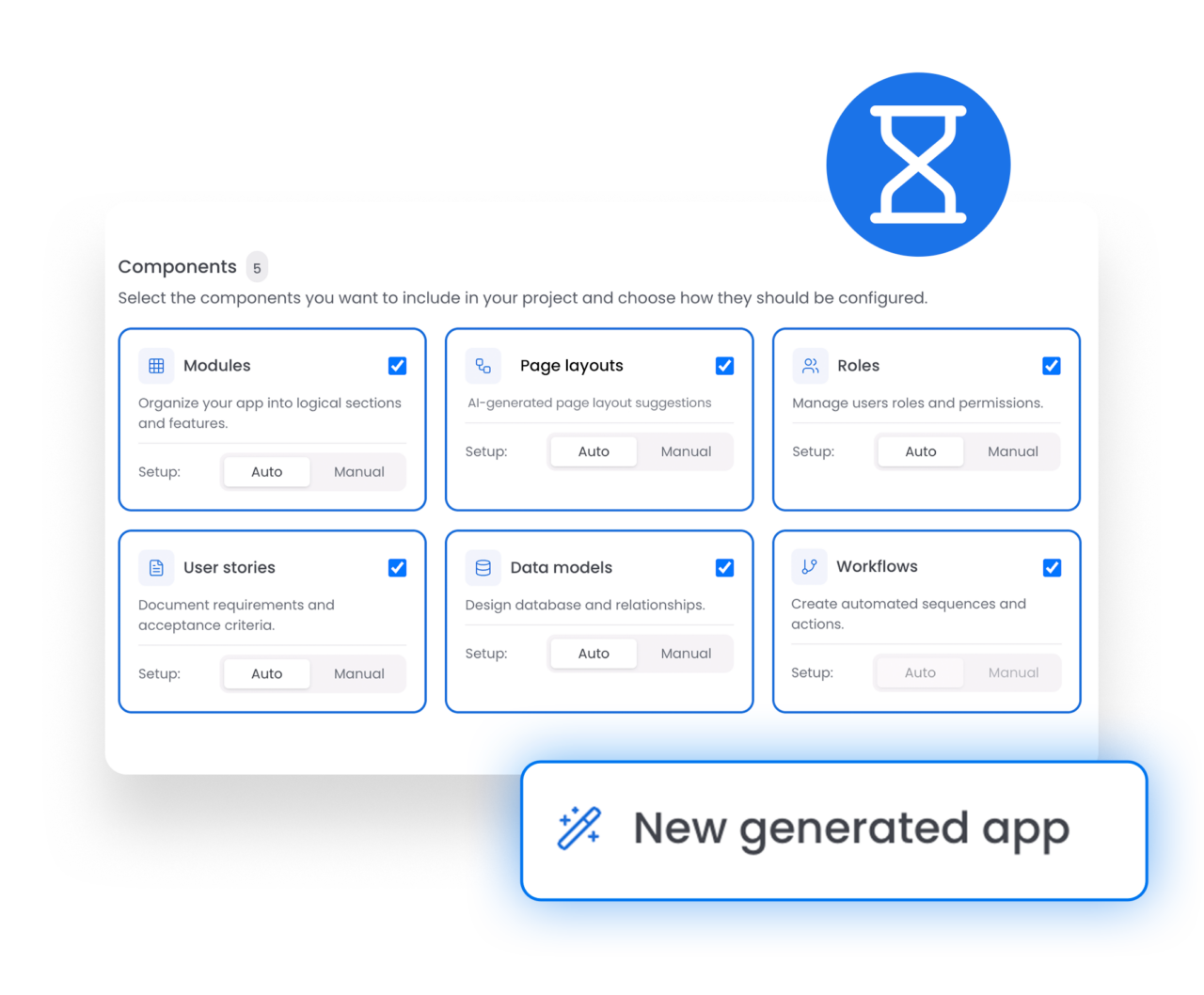
Using Agentic AI to convert system documents into governed, implementation-ready workflows
Reconstructing core processes is often the slowest, most expert‑dependent part of changing enterprise systems. Building on the Agentic modernization blueprint, Rappit now also generates approval-based workflows. It identifies status transitions, actors, actions, and rules, and produces workflows that open in the Workflow Designer for human-in-the-loop review and refinement.
- Business value: Faster time to clarity on how work actually flows today, and a structured way to change it.
- IT value: A head‑start on workflow logic that used to take weeks of manual modeling, with full control to refine and govern the final design.
Using Agentic AI to propose page layouts from your application blueprint
Even with data models and stories in place, page design can slow projects down. Rappit’s AI Page layout suggestions use the same blueprint inputs and generated data models to propose detailed page layouts automatically.
Agentic AI recommends sections, tabs, embedded child grids, and action bars that follow Rappit’s Bootstrap‑style multi‑column layout system. Everything is editable in the existing designer, so teams can refine instead of starting from a blank canvas.
- Business value: More usable screens that make adoption easier and reduce training time.
- IT value: High‑quality starting layouts and consistent UI patterns that are simpler to maintain over time.
Adaptable AI agents that turn core systems into decision support and digital revenue
Rappit’s AI agents are customizable solutions that integrate into existing systems and channels, using your own data to provide faster answers, smarter recommendations, and fewer dead‑end journeys for employees and customers.
Enterprises can typically launch a fully customized agent in 6–8 weeks with Rappit’s proven agent framework and pre-built building blocks, without the time and cost of developing and productizing everything from scratch.

Knowledge AI Agent for enterprise knowledge management and frontline support
The Knowledge AI Agent turns dense, fragmented documentation into a living, conversational knowledge resource. It uses semantic search and retrieval‑augmented generation to understand questions in plain language and return grounded answers with citations, so frontline staff and knowledge workers get near expert‑level guidance in seconds, instead of hunting through folders.
- Business value: Faster case resolution and onboarding, fewer “how do I?” escalations to specialists, and more consistent, auditable decisions across teams.
- IT value: A governed, pluggable intelligence layer on top of existing document systems, exposing institutional knowledge through conversational interfaces without restructuring the underlying applications.
Recommender AI Agent for intelligent product discovery and upsell
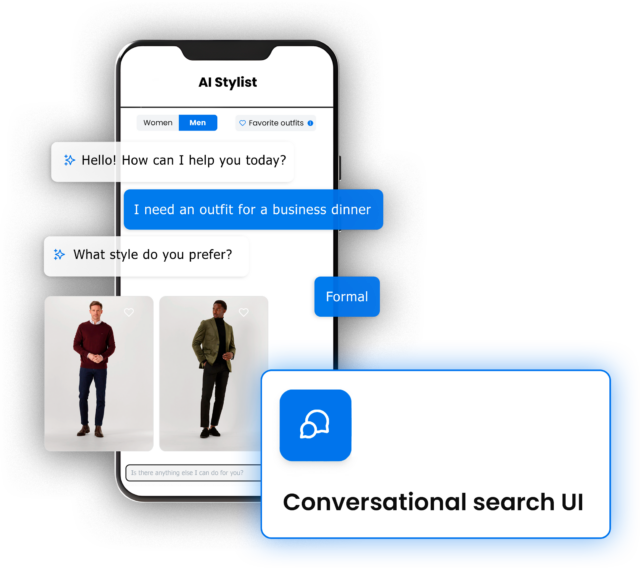
The Recommender AI Agent is Rappit’s AI‑powered digital sales assistant that turns product catalogs into guided, conversational shopping experiences. It uses semantic, vector‑based search and multi‑turn dialogue to understand real customer needs, narrow down options, and return ranked recommendations, so shoppers feel expertly guided instead of left to guess through filters and search bars.
- Business value: Higher conversion rates, increased average order value, and fewer abandoned or dead‑end journeys in digital channels.
- IT value: A configurable AI layer that plugs into existing catalogs and channels, using your product feed and APIs to deliver personalized recommendations without rebuilding your ecommerce stack.
Rappit’s AI agents give enterprises a faster, lower‑risk path to production‑ready AI experiences. As you strengthen your core with Rappit, you can deploy AI agents where they have the clearest impact and scale at the pace your governance and teams can sustain.
A faster path to AI‑powered enterprise applications on an even stronger Rappit platform
Rappit’s Spring 2026 release pushes core systems closer to how modern product teams already work: continuous delivery on a stable backbone, AI that accelerates the messy parts of change, and reusable agents that bring intelligence into the applications people actually use every day.
If your roadmap includes reducing technical debt from legacy systems, rolling out new digital journeys, or proving ROI on AI beyond prototypes, Rappit is the partner that changes the question from “can we build this?” to “how quickly can we turn our next core‑system initiative into measurable impact?”.